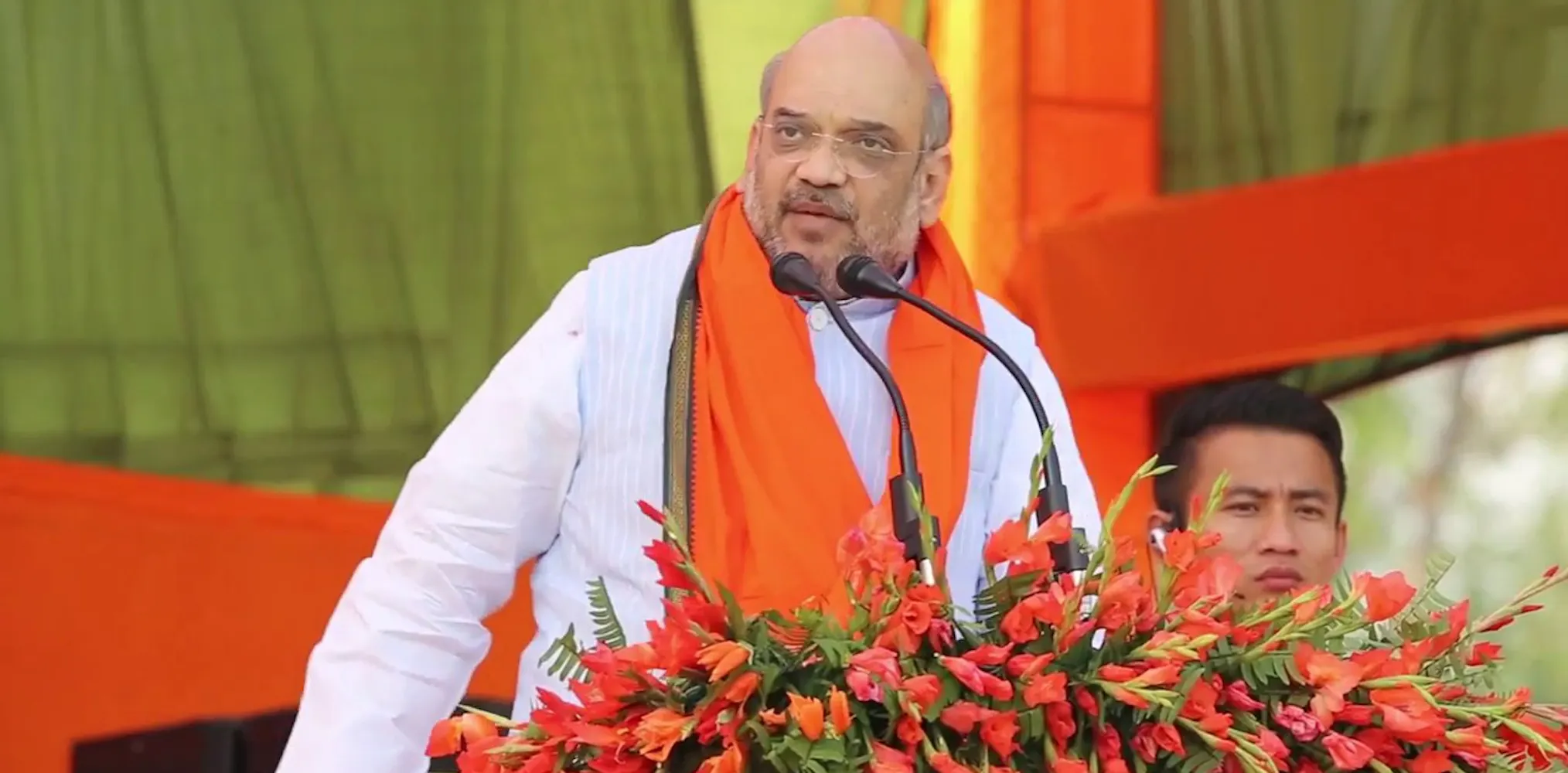
Union Home Minister Amit Shah made a bold declaration on Thursday, asserting that the Indian government will not extend reservations to Muslims based on religious grounds, citing constitutional limitations. This assertion emerged amidst a heated debate in the Lok Sabha, where Shah introduced three significant bills aimed at amending the women's quota law and establishing a delimitation commission. The remarks come at a time when discussions surrounding caste and community representation are intensifying nationwide, particularly regarding the role of reservation policies in balancing social inequities.
During the 40-minute discourse, Shah reiterated the government's commitment to a caste census, which will coincide with the current population enumeration, a move that he argued underscores the government's recognition of the complexities of caste dynamics in India. Highlighting the ongoing household count, he stated, "Right now, the counting of households is underway and the households do not have any caste." His comments were a direct response to demands from opposition leaders, notably from the Samajwadi Party, who have been vocal advocates for the inclusion of Muslims in reservation policies based on religion—a proposition Shah categorically dismissed as unconstitutional.
The historical context of India's reservation policies reveals a long-standing tension between caste-based privileges and religious identities. Since the inception of the Constitution, reservations have primarily been aimed at uplifting historically marginalized communities, particularly those belonging to Scheduled Castes and Scheduled Tribes. The notion of extending these benefits to specific religious groups, such as Muslims, has sparked significant debate, with proponents arguing for inclusivity while opponents cite constitutional constraints and the potential societal division it may cause.
In this charged political atmosphere, Shah's assertion stands out as a reaffirmation of the current government's ideological stance against religiously-based reservations. His comments not only align with the ruling party’s broader narrative of promoting a uniform set of criteria for social justice but also reflect a strategic maneuver to consolidate voter support amidst rising demands for equitable representation. As the discourse around caste and community continues to evolve, the implications of Shah's statements may reverberate through India's socio-political landscape, influencing both policy and public sentiment in the near future.