“The unhomed is a problematic of boundary-crossings... It is the condition of being both inside and outside at once, a state where the border ceases to be an edge and becomes a space inhabited by those who are caught in-between"
This theory by Homi K. Bhabha, postcolonial theorist, highlights how postcolonial states weaponize paperwork to turn identity into a constant interrogation. Under this framework, an individual is never permitted to be a fully realized, stable citizen. Instead, their belonging remains a fluid, pending question mark, subject entirely to the state's shifting policy goals that suit its immediate political interests.
The newly released Bollywood movie, Welcome to the Jungle, the star-studded third film in the Welcome comedy franchise, presents a chaotic mishmash of so many actors in a single frame that audiences need physical notes just to keep track of who is doing what.
Similarly, welcome to India's great Passport Bungle. Between birth certificates, school leaving certificates, utility bills, PAN cards, driving licenses, and Aadhaar cards, the average resident needs a massive spreadsheet just to figure out which piece of paper makes them a genuine human being today.
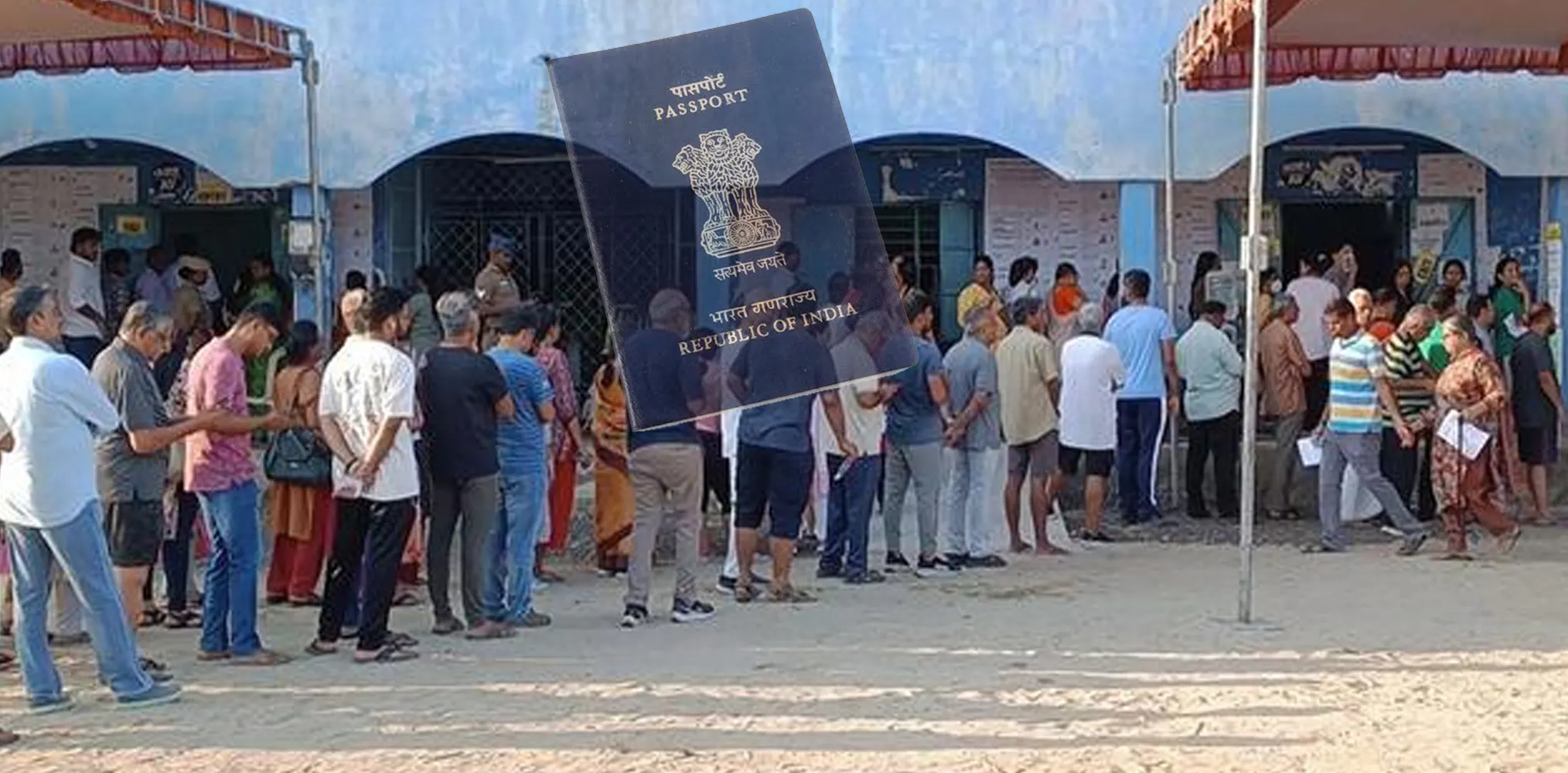
Today, the Indian state has successfully plunged its citizens into a permanent, existential "Who Am I?" crisis, much like the clueless characters in Welcome to the Jungle, who have absolutely no idea what they are doing in the film. By officially declaring that the very passport it issues is no longer a definitive document of citizenship but a mere travel permit, the state traps its people in the exact "Unhomed" dilemma that Homi K. Bhabha diagnosed.
With a single stroke, the government has essentially declared that a passport is just a travel document to allow the holder to leave or arrive in the country, but it does not prove they belong as a citizen.
This forces the holder to scratch their head and yell, "If the state's highest biometric seal doesn't prove I am a citizen, what does? A ticket to a nationalist movie like Dhurandhar? A membership card of the ruling political party? Or should I just get a lotus tattooed on my forearm like a Swastika so the local administration recognizes me?"
Like the “Unhomed”, the passport holder is legally present, but lacks the arbitrary corporate tokens or domestic bills required to prove they are actually a citizen. They are validated by international law, yet erased by local authorities.
One must deeply admire the comedic genius of this setup. Most nations design passports to be the definitive proof of nationality. If you hold a French passport, France agrees you are French.
India, however, has pioneered the concept of the "Schrödinger’s Document." It is a booklet issued only after a grueling, months-long gauntlet where police officers physically visit your home and interview your neighbours. Yet, the absolute second the government hands it to you, the rest of the country’s administration looks at it and says, "Nice try, but who are you, really?"
By declaring the passport a mere travel permit, the bureaucracy has successfully institutionalized the philosophy of "It’s a thing, but it’s not THE thing." Your passport confirms you are a citizen to the United Nations, but it cannot convince a booth-level officer during a routine verification or any normal registration process.
Of course, the humor curdles into something far darker when you look at the strategic, brilliant timing of it all. With massive electoral roll revisions underway, declaring the country’s most secure, legally audited document to be a mere "travel accessory" is not a bureaucratic oversight, it is a flawless political masterstroke.
Political theorist Hannah Arendt famously noted that modern disenfranchisement thrives on creating people who are stripped of "the right to have rights", a condition where citizens lose a stable place in the world where their actions matter, transforming belonging into a permanent, moving target.
By dissolving the legal weight of official documents into a cloud of arbitrary domestic paperwork, the state pulls off a magnificent magic trick. Bureaucratic ambiguity becomes a weaponized filter. It allows local authorities to look at an unwanted voter, ignore their government-issued identity booklet, and simply ask, "But do you have a gas bill from 2014?"The right to vote is no longer guaranteed by the emblem on your passport; it is contingent on your ability to produce an endless paper trail, or perhaps, your visible enthusiasm for the ruling dispensation, a dynamic that conveniently proves you are a certified “National” and not a suspected “Anti-national”.
In the grand finale of this administrative theater, we may soon witness a frantic rush of Bhabha’s “Unhomed” citizens descending upon local offices, desperately begging petty bureaucrats to confirm whether they actually belong to the very soil they have inhabited for generations.
And there they will remain, cramped in endless queues before arbitrary tribunals, globally recognized, locally rejected, and suspended in a permanent geopolitical Trishanku. They would be reduced to frantically waving a blue booklet and a chaotic mess of sundry documents at a world that completely believes them, while standing in a homeland that absolutely does not, at least, not until the local municipality painstakingly verifies their grandmother's primary school report card.