“Kuch to majbooriyan rahi hongi/Yun koi bewafa nahin hota/Ji bahut chahta hai sach bolen/Kya karen hausla nahin hota” (Some compulsions were there, no doubt/One is not unfaithful just like that/My heart aches to speak the truth/But oh! The courage I lack)
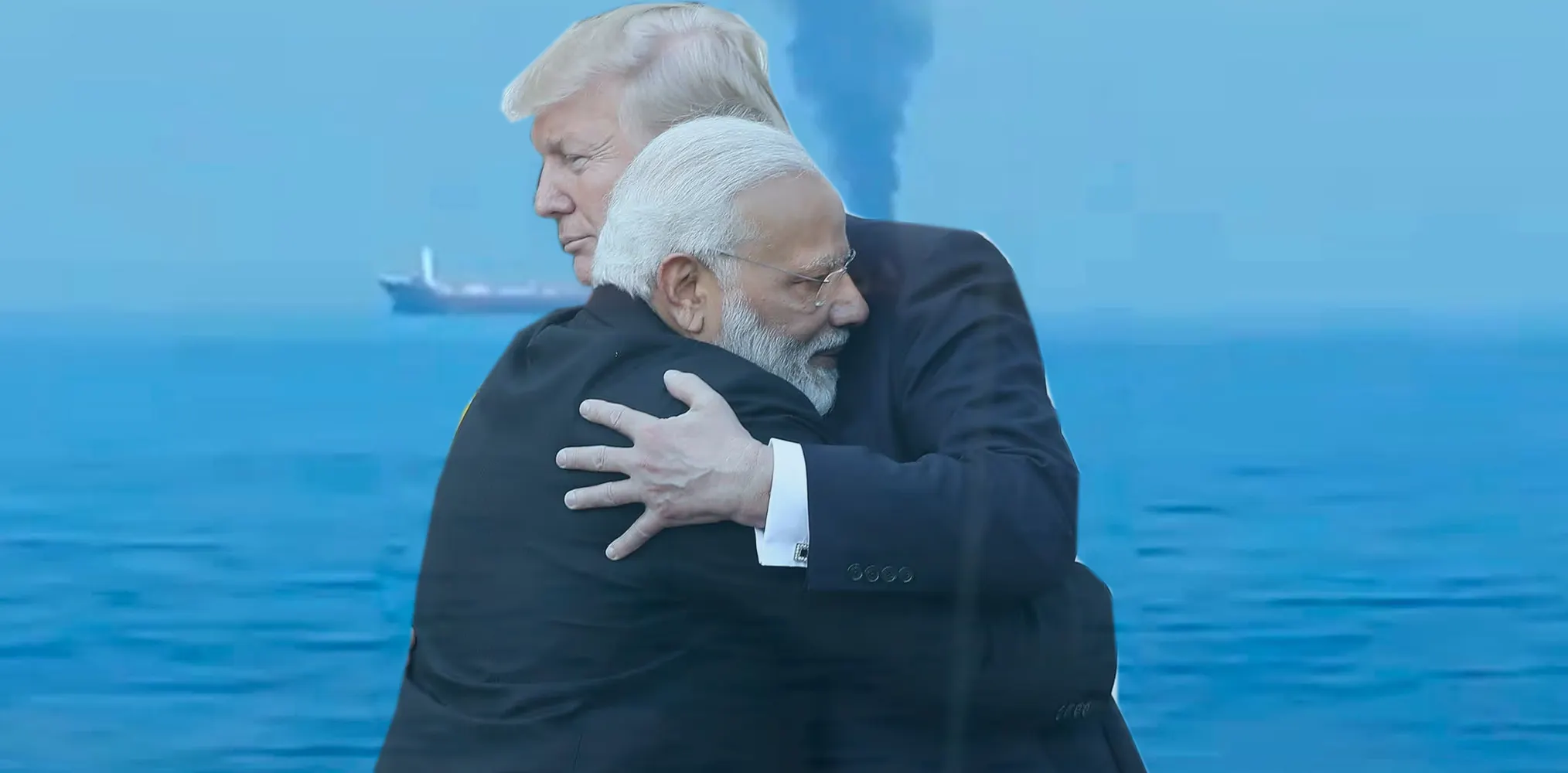
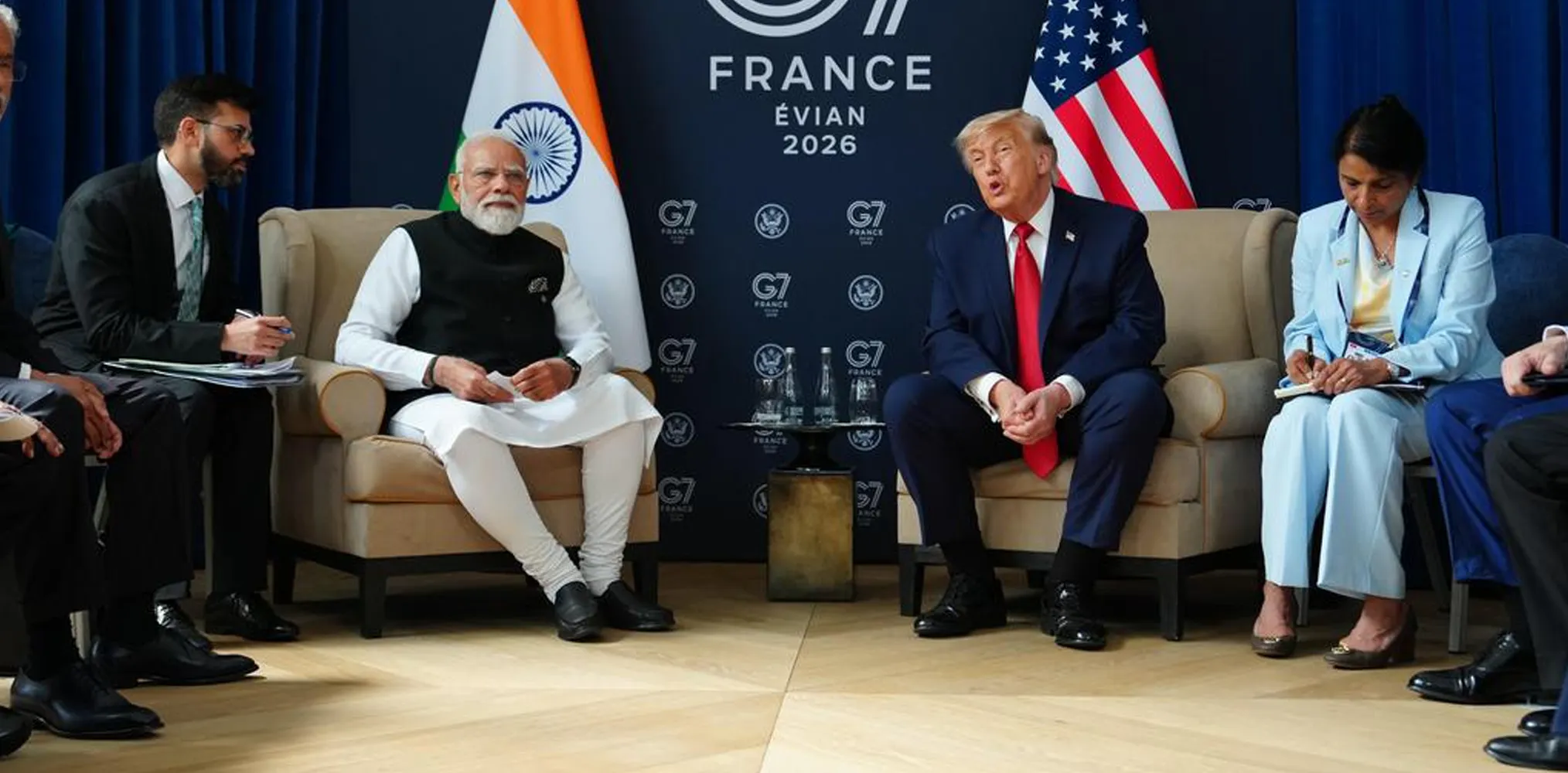
The flashing cameras at the G7 summit caught a perfect moment of Bashir Badr’s poetic angst between the Indian Supreme Leader and the US President.
Their meeting perfectly captured the essence of the couplet: "My heart aches to speak the truth, but oh! The courage I lack." The Indian leader’s body language screamed that he desperately wanted to speak up, but his survival instincts reminded him that he completely lacked the spine, although his supporters might politely call it “diplomatic etiquette.”
This helplessness was painful when it came to the recent killing of Indian sailors in the Gulf of Oman. Addressing this tragedy required real bravery, which neither leader brought to the table. Instead of discussing actual strategy, both men folded under the pressure of "nameless compulsions", a polite term for protecting their own political interests. They completely abandoned serious discussion, flashed fake smiles, and silently agreed that telling the truth was simply too terrifying to attempt.
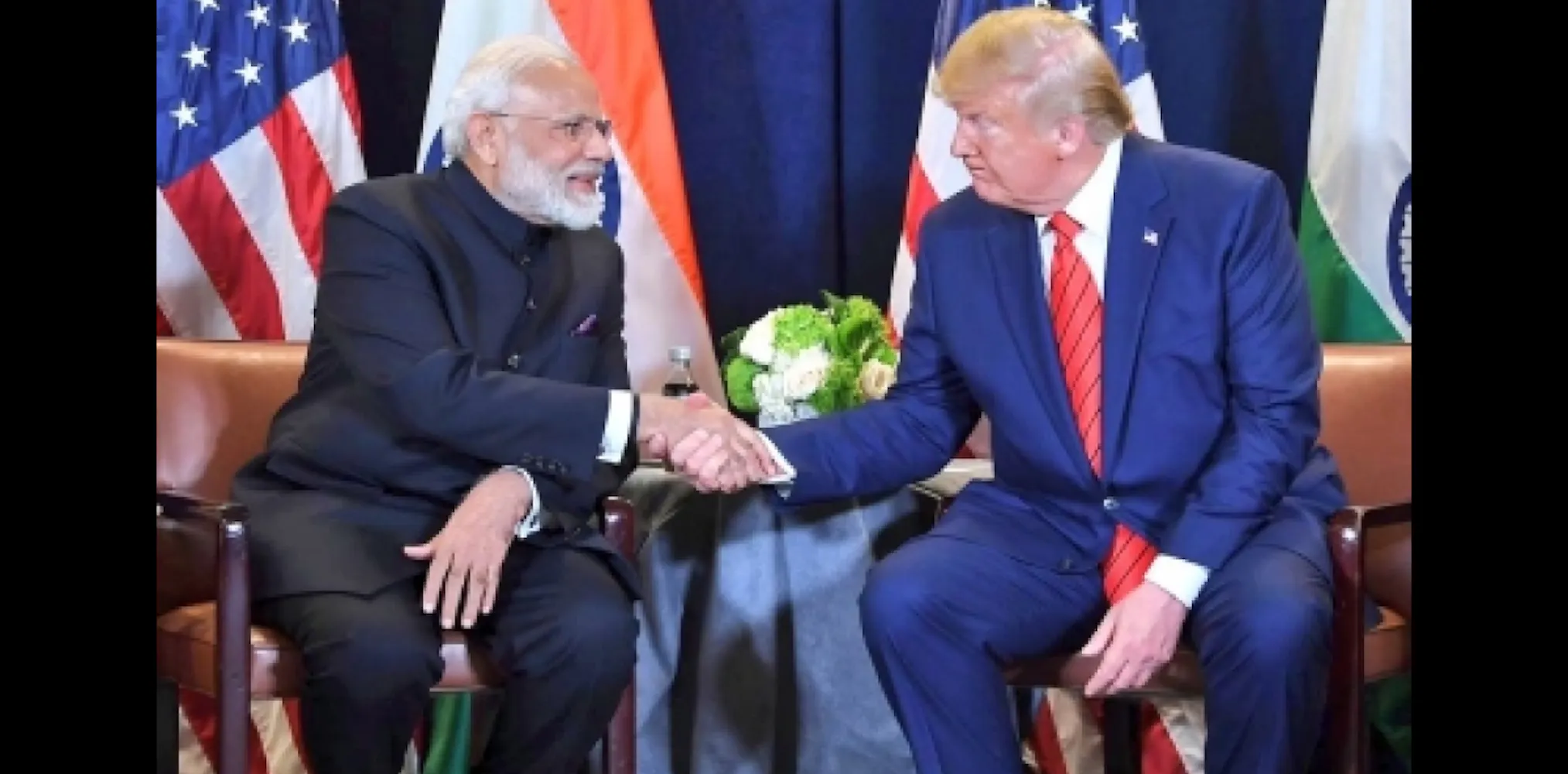
All these desperate theatrics feel hilariously familiar, thanks to a loyal domestic media that worked overtime to turn a routine photo-op into a historic victory. The entire focus and hype were on the Indian leader shaking hands with Trump and scurrying for prime real estate in the front row of the G7 group photo. Back home, television anchors and his IT cell warriors practically threw a national festival, tracking his physical coordinate positions on stage and hyping these brief photo sessions as proof of total global dominance.
In reality, it looks exactly like walking into a local salon or a roadside astrologer’s office. You are instantly hit with a wall of dusty, framed photos showing the barber or fortune teller smiling widely next to movie stars who accidentally walked in years ago. The media's frantic coverage served the exact same goal: use a few seconds of close proximity to a superpower leader to trick the public back home into believing their man runs the world.
When the dust settled, the actual diplomatic results were non-existent, no matter how much the news channels shouted otherwise. The Indian leader carefully brought up the safety of Indian sailors in the Strait of Hormuz but remained completely silent on the identity of the attackers, helplessly refusing to name the United States directly. Interestingly, these remarks did not appear in India's official readout.
The MEA’s official summary completely erased his specific mentions of seafarers’ deaths and shipping disruptions in the Strait of Hormuz. Just like the leader himself, the ministry chose to hide behind generic, feel-good buzzwords like "international trust" and "respect for international law." Furthermore, perfectly matching his earlier stance of avoiding any public reaction to the actual strikes, his statements at Evian conveniently failed to connect the deaths directly to the attacked Indian-crewed ships. Ultimately, his words were meticulously designed to be as vague and non-committal as possible, as if entirely intended to avoid hurting Trump’s ego.
Instead of pushing for real answers, he praised Trump's peace efforts in West Asia. Trump effortlessly brushed these life-or-death security concerns under the rug, offering zero real assurances with a casual, “Yeah, I do” reply while describing seafaring as “a rough profession.” He added that the US and India “work together on it,” but noted that “this has been happening throughout time,” while firing back a wall of empty compliments that the domestic media immediately blasted as "mega praise."
Trump went even further by offering a patronizing public endorsement, claiming the US would protect India as long as the Supreme Leader remained in office. Instead of declaring that India is a strong nation capable of protecting itself, the Indian leader sat quietly, obediently smiling through the ridicule. By refusing to speak up, he almost endorsed Trump’s claims of playing the "Big Brother" role in forcing the ceasefire between India and Pakistan during Operation Sindoor.
The silence was deafening. This is the same US president who cut aid to NATO nations, slapped heavy taxes on countries like India, and oversaw the killing of Indian seafarers. Yet, he claims to be India's friend, and India's leader simply listens without a word while news anchors celebrate it as a diplomatic masterstroke. To add insult to injury, this meeting happened on the exact same day Washington dropped "Indo" from the name of its Asian military command, completely erasing a title that India's media had long celebrated as a symbol of its global importance.
This total silence from the Indian Supreme Leader was not just shocking; it exposed a massive, unnecessary diplomatic weakness. It stands out even more when compared to Iran's recent playbook. Iran lost almost its entire military leadership and suffered massive hits, yet they still showed enough muscle to force the US to sign a peace deal disguised as a simple MoU.
India had the perfect chance to exploit Washington's diplomatic embarrassment and demand real accountability for its dead sailors. Instead, the Indian leader chose to practically beg for general seafarer safety in the Gulf region. Trump, with total confidence and zero remorse, casually shrugged off the plea.
He essentially told India that these are rough times and bad things just happen to everyone, as if channeling his inner Shah Rukh Khan to remind the world that "bade bade deshon mein, aisi chhoti chhoti baatein hoti rehti hain."