"A leader's biggest danger isn't their enemies, it is the out-of-control behavior of their lieutenants and confidants. When those allies go too far, the public blames the leader for everything”.
What the above profound statement suggests is that “even if the leader didn't do anything wrong personally, the public will judge the entire government based on the bad behavior of that one partner”
In the annals of political downfalls, leaders are rarely destroyed by their direct enemies; they are more often undone by the unchecked audacity of their chief lieutenants. History provides sharp warnings on this front.
Think of Grigori Rasputin, whose brazen manipulation of state machinery eroded the credibility of Tsar Nicholas II, or Sanjay Gandhi, whose extra-constitutional high-handedness during the 1975–1977 Emergency turned a powerful Prime Minister into a political liability and caused a historic electoral wipeout.
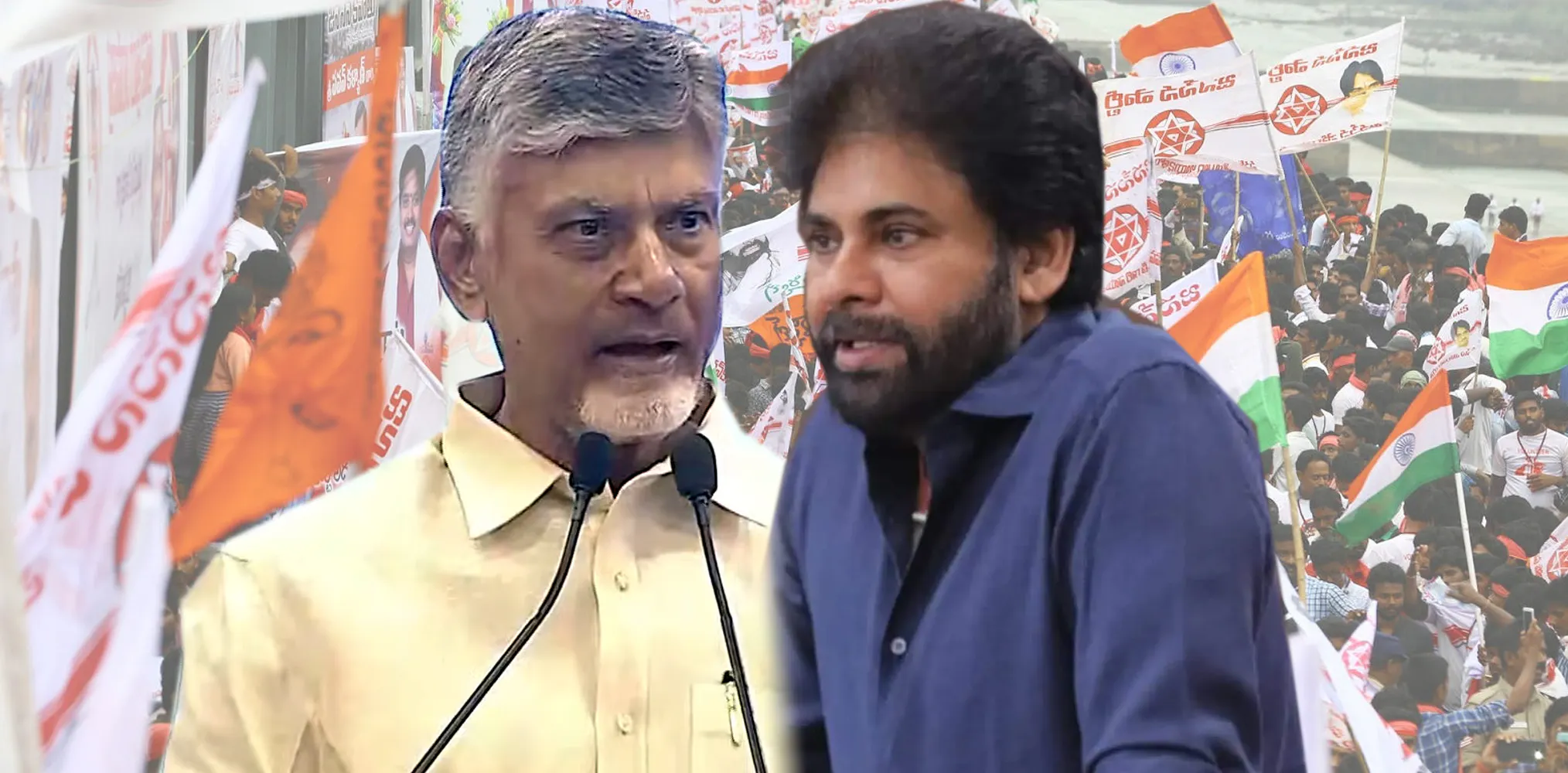
A similar, highly concerning dynamic is unfolding in Andhra Pradesh. The recent actions of the State’s Deputy Chief Minister, specifically his crusade against online critics, are rapidly transforming from a personal vendetta into a major political liability for Nara Chandrababu Naidu (CBN), the state’s self-styled visionary CEO-styled CM, and his ruling TDP-led coalition.
The flashpoint for this growing institutional crisis is the relentless state crackdown on Dalit Christian YouTuber Bachalakuri Joseph, popularly known as "Prashna" Raavan. Following a speech critical of the government as well as the Deputy CM, the state’s law enforcement apparatus was deployed in a manner that displayed scant regard for constitutional boundaries, despite bail being granted by the local courts.
As if to block further legal recourse and to permanently prevent any relief from the courts, the police invoked the draconian Unlawful Activities (Prevention) Act (UAPA), an anti-terror law meant for national security threats—charging the digital commentator with "waging war against the government."
It is the height of hypocrisy by all moral standards; his detention under UAPA, after four successive arrests followed by the grant of bail under other offences, was meant to satisfy the ego of a "Power Star" and his so-called method of madness ("Naako Thikka undi, Daaniki O lekka undi"), who entered politics promising to “question” the establishment.
Discerning observers allege this is a subtle endorsement of the Deputy CM given his public pronouncements to that effect. His public rhetoric has turned explicitly aggressive, using movie-style dialogue to warn critics that the government will "crush them" if they cross the line. Reports indicate that Station House Officers are being pressured directly by his circle to pursue critics, reducing the state police force into his personal grievance cell.
To understand why the actor-turned-politician is behaving so aggressively, one must look at the psychological friction between his cinematic "hero" image and his actual administrative powers. In the alliance cabinet, CBN’s party MLA holds the Law-and-Order portfolio, while his son, Nara Lokesh, commands high-profile ministries—a scenario where his fans feel their leader is being eclipsed by the TDP leadership.
Lacking direct control over the Home Ministry, his critics contend that he has resorted to public outbursts, even rebuking his own coalition's Home Minister, to prove to his base that he is still the one calling the shots. By directing the police to hunt down internet trolls and commentators with absolute brazenness, he is trying to project the image of an all-powerful, unassailable leader who cannot be trifled with.
While he plays out his cinematic alpha-male fantasies, the actual political cost is being billed directly to CBN’s account. This overreach poses a structural threat to the TDP's electoral future, particularly, in the backdrop of growing clamor from a section of Kapus demanding CBN to handover the CM post to the deputy CM for the remaining tenure or declare as the CM candidate of the alliance in the next elections.
CBN has spent 40+ years building his reputation as a sophisticated, law-abiding visionary focused on development, IT, and ease of doing business. By allowing his Deputy CM to turn the state into a personal fiefdom where anti-terror laws (UAPA) are slapped on internet commentators, his carefully curated image of a mature statesman has the potential of being completely shredded.
Slapping multiple cases and terror charges on a Dalit Christian influencer is terrible optics. It hands the opposition YSRCP, including the Left parties, a potent emotional weapon to consolidate Dalit, minority, and neutral voters against the TDP-led establishment. It frames the government not as a progressive coalition, but as an intolerant, vengeful regime.
When a deputy Chief minister publicly bypasses administrative channels and demands a police force to operate on personal whims, it breaks the chain of command. The state's bureaucracy and police officers feel caught in the crossfire of alliance power dynamics, leading to structural paralysis within the government.
Just as Sanjay Gandhi’s unchecked excess during the Emergency became the primary reason the Indian masses turned on Indira Gandhi, CBN’s deputy’s brazen disregard for due process may fast become the Achilles' heel of his governance and reputation.
CBN is a veteran politician who understands the laws of political gravity. If he continues to play the ostrich while his deputy uses the state machinery as a personal weapon against critics, the electorate may eventually hold him responsible, and punish the TDP ruthlessly at the ballot box.