“Hamein to apno ne loota, gairon mein kahan dum tha / Meri kashti wahan doobi, jahan paani kam tha” (I was robbed by my own, for the strangers lacked the might/My boat sank in shallow waters, where the shore was almost in sight).
This timeless couplet by Firaq Akthar captures a haunting political reality: empires and parties rarely fall to external storms alone, they are often undone by internal leaks.
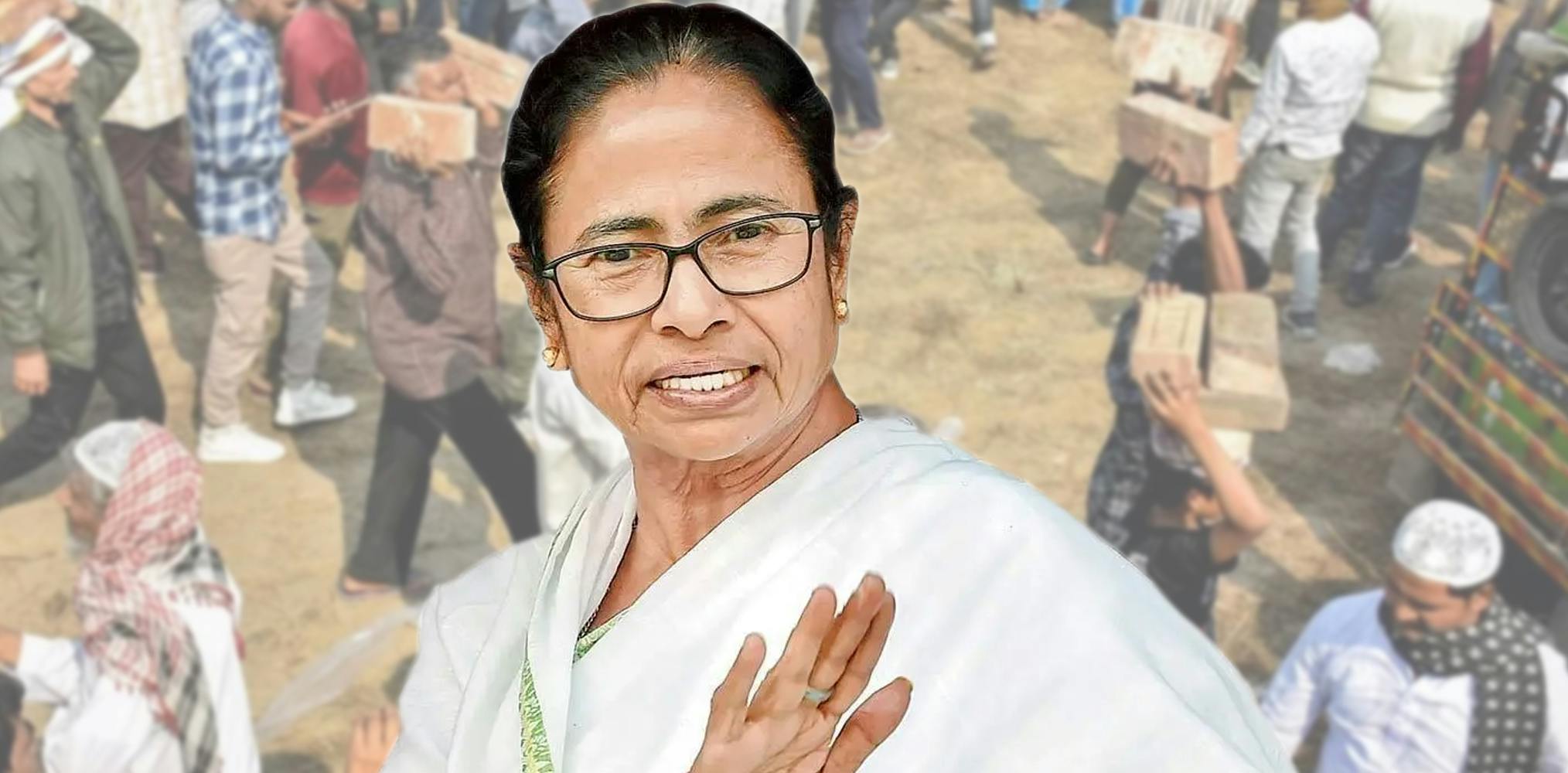
As West Bengal prepares for its next political chapter, firebrand Chief Minister Mamata Banerjee may be facing her own "Akbar moment," echoing a historical betrayal that once altered the course of the Mughal Empire.
Centuries ago, Emperor Akbar’s vision of Sulh-i-kul (universal peace) was threatened not by a foreign invader, but by his foster brother and general, Mirza Aziz Koka.
By embracing religious orthodoxy and abandoning Akbar’s secular court, Koka polarized the nobility. This internal fracture did not just weaken Akbar, instead, it provided the ideological fuel for his rivals to eventually push the empire toward a more conservative, divided future.
Today, a similar drama is unfolding in Bengal. Humayun Kabir, a suspended Trinamool Congress (TMC) MLA, (since suspended), has moved from Mamata's inner circle to the outer fringes of rebellion.
By constructing a replica of the Babri Masjid in Murshidabad and floating the Janata Unnayan Party (JUP), he is attempting to detonate the "secular equilibrium" that has long been the bedrock of the TMC’s dominance.
Kabir’s timing, aligning his project with the anniversary of the Babri destruction, was no accident.
It appears a calculated strike against the TMC’s social engineering. For years, Mamata Banerjee has positioned herself as the "secular bulwark," a strategy that relies on the unified support of the state’s 27% Muslim population.
By attempting to form a "United Front" of Muslim voters, Kabir is introducing a brand of identity politics that Bengal was once thought immune to.
This fragmentation is an existential threat to the TMC. As history in other Indian states like Bihar and Maharashtra with AIMIM in contest, has shown, even a 2-3% split in a consolidated vote bank can shift the fragile balance of power, invariably aiding the BJP’s electoral ambitions in the state.
The push for a minority front is fuelled by genuine delicate issues like the removal of 37 groups from the OBC list that threatened many Muslim communities in West Bengal's OBC lists, administrative changes to Waqf related lands, despite the TMC’s public resistance to the Waqf Law Amendments, sparked concerns about community autonomy.
Anxiety among the Muslims and other minorities is also high due to the Special Intensive Revision (SIR) of voter rolls. Many minority voters fear this exercise could lead to disenfranchisement, especially after the Election Commission ruled that OBC certificates issued after 2010 can no longer be used as valid ID for the revision process, while TMC looked helpless in their cause, despite a display of intense opposition to that effect.
Thus, the potential for a "spoiler" effect by Kabir and his ilk, similar to AIMIM or the ISF, might have the potential to threaten or erode the TMC’s winning margins in its traditional backbones.
However, dislodging Mamata Banerjee, as of now, remains a formidable task. For many, she is still the sole protector against the NRC and CAA.
But for the first time since 2011, the threat is coming from within in the form of Kabir, once her close confidante.
If Kabir succeeds in creating a "communal cleavage" in the institutional support of the minority vote, the TMC’s political boat may not be sunk by a massive external storm, but by the very waters it assumed were shallow and safe.
The turbulence in Bengal is a warning: Mamata can no longer take its most loyal base for granted, and as such she might face her own “Akbar’s Moment”.