“Wherever, out of the facts, a simple deductive argument from indubitable premises can be elicited, history may yield useful precepts”
Above observation of Bertrand Russell suggests that history yields "useful precepts" only when we extract logical truths from undeniable facts.
Yet, in the theatre of modern Indian politics, the "cool logic" of the historian has been replaced by the hot rhetoric of the partisan. For the current leadership, the history of India’s founding is no longer a source of wisdom, but a stockpile of raw material, cynically reshaped and rearranged to weaponize the past against the present.
In the modern Indian political theatre, the past is no longer a foundation to build upon; it has become a courtroom where the dead are perpetually on trial to excuse the failures of the living.
The power of this tactic is perfectly captured in a chilling scene from Game of Thrones. Young King Joffrey Baratheon sits leafing through the Book of Brothers, the record of the realm’s greatest knights.
"Four pages for Ser Duncan," Joffrey muses, his voice dripping with sarcasm. "He must have been quite a man."
By invoking the legendary Ser Duncan, the Tall, Joffrey wasn't honouring the past. He was using the "four pages" of a dead man’s glory to mock Jaime Lannister’s empty record. He used a historical yardstick to measure and diminish, a man standing right in front of him.
This scene appears to be replaying in the political theatre of New Delhi.
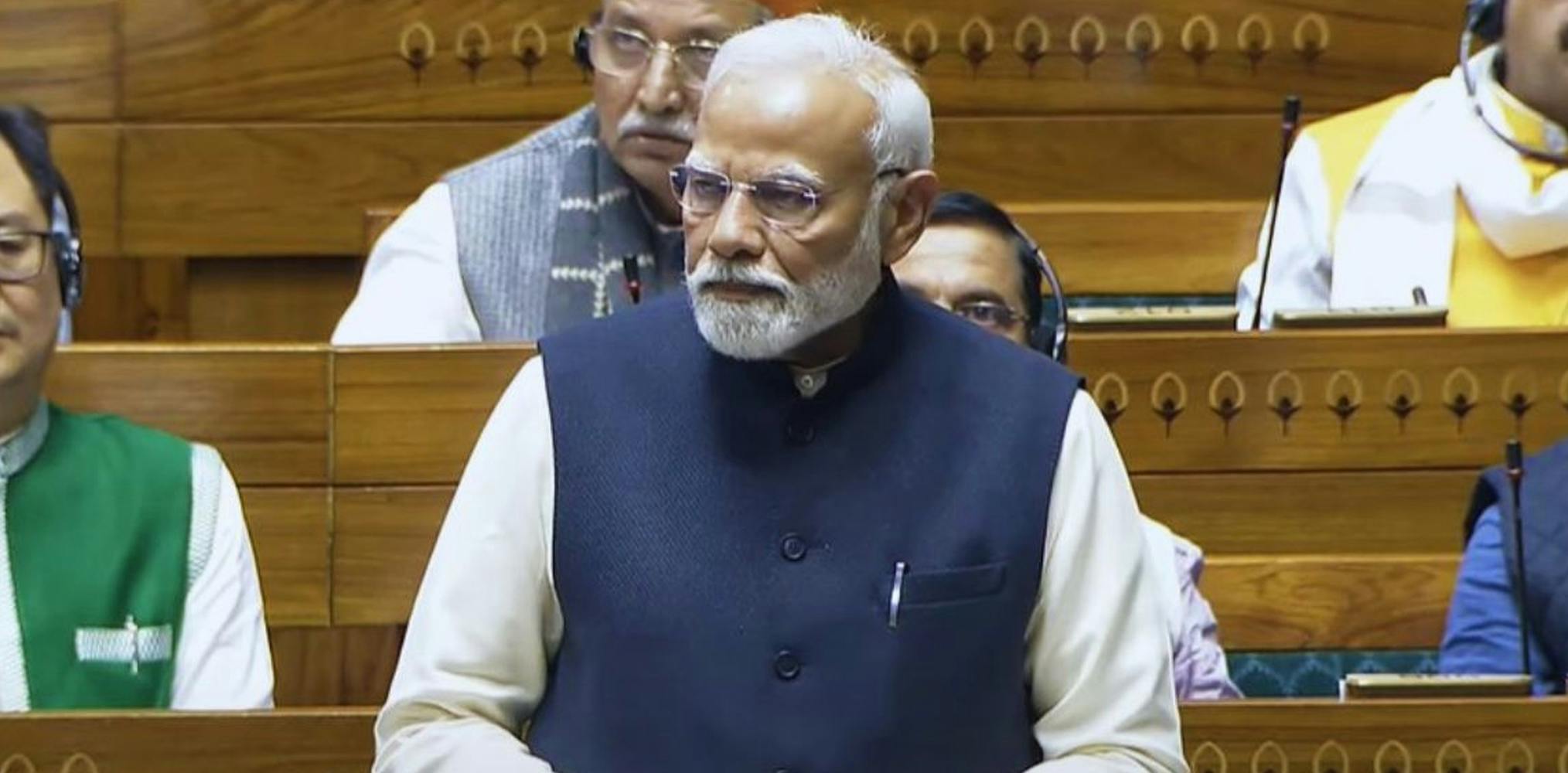
Over the last decade, a strikingly similar drama has unfolded within the hallowed halls of the Indian Parliament.
During recent debates on the Motion of Thanks to the President’s Address, the script remained unchanged. The current leadership continues to reach into the "Pages of History," dragging the names of India’s founding fathers onto the floor of the House.
But there is a cynical twist in the Indian version. In Game of Thrones, Joffrey used a giant’s greatness to shame a lesser man. In "New India," the leadership seeks to diminish the giants of the past to make itself look taller through a “Scapegoat theory”.
Whenever a modern policy falters or it’s caught in an embarrassing situation, the treasury benches retreat to the 1950s. The leaders who navigated the wreckage of a colonial regime and built a democracy from the ashes of 1947 are no longer celebrated as architects, but are cast as the authors of today’s problems.
By turning historical records into a list of grievances, the government escapes the "accountability of the now."
It is a strange sort of political alchemy that tries to turn the "gold" of India’s democratic origins into "lead" to explain away modern-day stagnation.
When an administration that has held power for over ten years spends more energy litigating the past than legislating the future, it ceases to lead and begins to haunt.
In fictionThorne" , Ser Duncan’s four pages represent a life of lived honour. In the reality of current Indian political theatre, the history of a nation appears to be a shield to hide behind when things go wrong.
History should be a shadow that guides our path, not a ghost we blame every time we trip in the dark.
India’s founding fathers have already their history, for better or worse, and their ink has long since dried.
The pressing question is why today's leadership remains so obsessed with vandalizing those old pages rather than finding the courage to write a new chapter of its own.