“When politicians rush to "cleanse" a public area, they are using modern ideas of cleanliness to hide a deeper, ugly truth: they are deeply uncomfortable with marginalized people sharing their space”
The above profound statement reveals how modern politics masks ancient bigotry as a “civic or environmental” cleanup.
Textual laws in the Manusmriti strictly governed the physical movement of Chandalas (marginalized groups outside the varna system). They dictated that if a lower-caste person touched an upper-caste individual or entered an unauthorized civic area, the affected party had to immediately perform a purification bath (snana) and recite mantras to purge the defilement.
In fact, Kautilya’s Arthashastra went a step further to institutionalize this at a state level, mandating that Chandalas live exclusively on the outskirts of cities. If they had to enter the city for work, they were required to strike a piece of wood to warn upper-caste citizens to avoid them, preventing widespread environmental pollution that would otherwise require mass state rituals.
This practice of ritual purification was not confined to legal codes; it finds prominent mention in the Uttara Kanda of the Ramayana through the execution and cleansing of Shambuka. Lord Rama beheads the Shudra ascetic under the premise of eliminating a source of spiritual pollution and restoring caste boundaries to "purify" the cosmos.
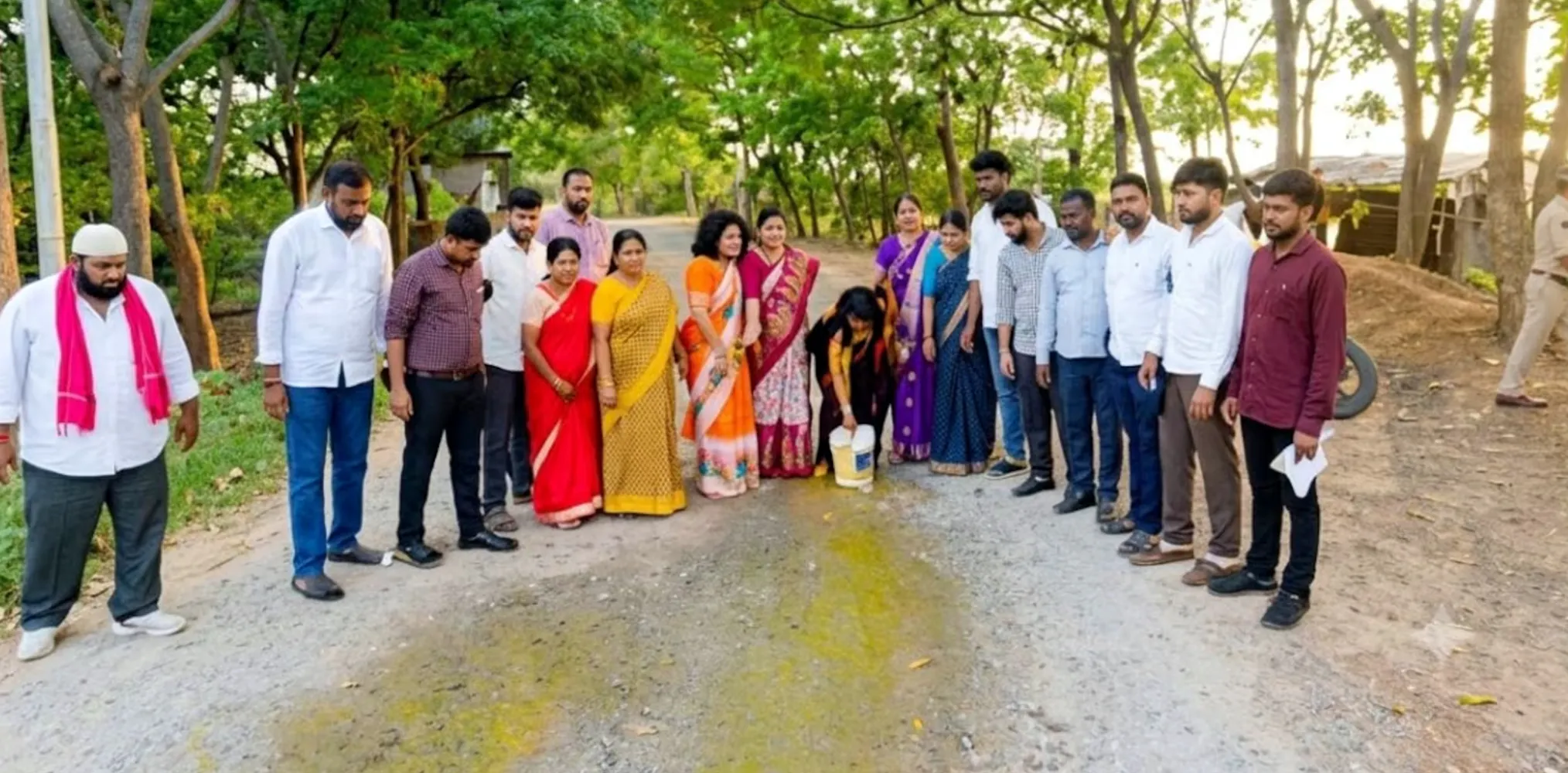
Fast forward to the contemporary landscape of a "New India" that self-appoints itself the Vishwaguru, and these purification acts seem to have become an intense tool of political discourse. Even as the dust is yet to settle on the “purification” ritual performed on a stage in Uttarakhand’s Haldwani, where Congress President Mallikarjun Kharge had addressed a public meeting, a similar anti-Dalit practice was publicly demonstrated in Telangana on Wednesday (September 9). This occurred just a day after Dalit leaders and Congress workers held a protest against BRS President and former Chief Minister K. Chandrasekhar Rao.
These modern acts, or rather, the “Politics of Purification”, are but brilliant displays of sanitation-based statecraft. They reflect that political parties across the country have discovered a groundbreaking alternative to debating policy, inflation, or unemployment: The Holy Washdown.
The script is now beautifully predictable. A leader from a marginalized community or an opposition faction holds a rally or visits a temple. The moment they pack up their microphones and leave, the host committee or rival political workers rush in with buckets of holy water, cow urine, and a heavy dose of metaphorical bleach. The goal? To "purify" the ground from the terrible, contaminating ideas, or identity, of the people who just stood there.
From the historic, tragicomic rinsing of the Chavdar Tank in 1927 to modern-day "cleanliness drives" after opposition political rallies, the message is clear: If you cannot defeat your opponent’s argument, you can at least scrub the floor where they made it.
For the modern politician, this ritualistic scrubbing is a stroke of pure genius. Creating jobs is difficult. Fixing public schools requires actual work. Crafting a nuanced economic policy takes time.
While this political theatre makes for great television ratings, the long-term prognosis for our democracy is grim. Observers warn that this obsession with ritual cleansing is aggressively deteriorating the wider political discourse, dragging modern democracy back into medieval times.
This slick repackaging of ancient caste bias into modern party tricks sends a scary message to regular people: even if you rise to become Chief Minister or Party President, some folks will still view your body as a dirty smudge that needs to be scrubbed away. Ultimately, as political talk shifts from fixing the economy to chasing "spiritual cleanliness," voters lose out big time, watching the country’s real, urgent problems get buried under a mountain of fake outrage and expensive soap suds.
If this trend continues unchecked, the future of our political campaigns will not be fought in town halls or TV debates. They will be fought in the cleaning aisles of local supermarkets. We are rapidly moving toward a political ecosystem where the most powerful tool in a party's arsenal is no longer a visionary manifesto, but a high-pressure water hose.
Until voters demand actual arguments instead of ceremonial rinse cycles, Indian politics will remain thoroughly clean, entirely sterile, and completely devoid of substance.
The modern "Holy Washdown" is ultimate proof of the ancient wisdom: "Yathā cittaṁ tathā vāco, yathā vāco tathā kriyā" (As a person thinks, so they speak, and so they act). While today's politicians may wear slick modern suits and mouth democratic slogans, their buckets of holy water reveal a mind still trapped in a medieval code. Their high-pressure hoses cannot wash away a basic truth: you can scrub the streets all you want, but you cannot sanitize a stained mind.