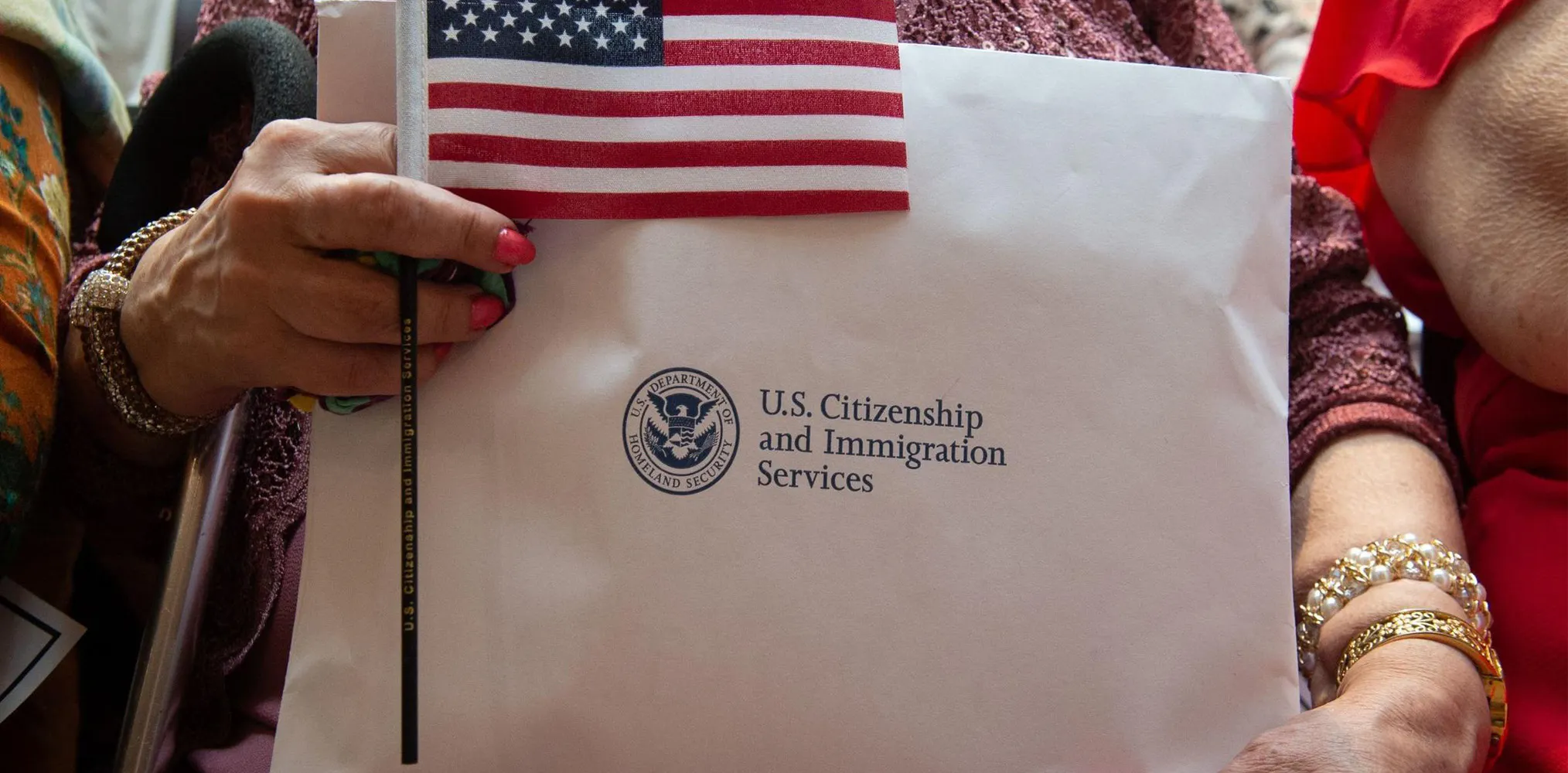
Citing that with a population of over four million, the Indian American community is one of the strongest foundations of India-US relations, a report has highlighted that immigration policies that treat foreign professionals as economic liabilities, rather than recognise their role in driving growth and innovation, risk eroding the trust and goodwill that have long sustained bilateral relations.
Indian students, researchers, entrepreneurs and professionals have built enduring links between the two countries, a recent report in 'Khalsa Vox' mentioned.
“For decades, the United States has built much of its economic and technological supremacy on a simple proposition: the world’s brightest minds should find their greatest opportunities on American soil. From Silicon Valley to leading research institutions, this openness has helped transform the country into an unrivalled centre of innovation. Yet Washington’s increasingly restrictive approach to the H-1B visa programme now threatens to undermine that very advantage, while placing an extraordinary strain on its relationship with India,” it mentioned.
“Under the banner of 'America First', the Trump administration has defended its immigration restrictions as necessary measures to protect American workers, eliminate visa fraud and discourage the misuse of foreign labour. These are legitimate policy objectives. However, the decision to impose a $100,000 fee on certain new H-1B petitions raises a fundamental question: is Washington genuinely reforming a flawed immigration system, or is it sacrificing a strategically valuable partnership for domestic political gains?” the report questioned.
It highlighted that the issue carries particular significance to India, as Indian professionals have consistently ranked among the biggest beneficiaries of the US skilled immigration system. Indian nationals accounted for nearly two-thirds of H-1B approvals in 2024, underscoring their strong presence across America’s technology, engineering and other specialised sectors.
Any blanket restrictions on the programme, the report warned, would inevitably affect Indian professionals, companies and families disproportionately as the consequences extend well beyond immigration.
“India’s information technology industry has spent decades building an intricate economic relationship with the United States. Indian technology firms support American businesses across banking, healthcare, telecommunications, manufacturing and digital infrastructure. Meanwhile, Indian professionals have contributed extensively to American innovation, often working alongside domestic employees in industries where specialised expertise is essential,” the report mentioned.
Over the past two decades, successive US administrations have made considerable diplomatic investments in developing a strong strategic partnership with India, it noted.
Cooperation in defence has expanded, technological ties have deepened, and the two nations have increasingly shared a common vision for maintaining stability in the Indo-Pacific. Against the backdrop of intensifying competition with China, India has emerged as a key pillar of America’s long-term strategic calculations, Khalsa Vox mentioned.
“But strategic partnerships are not sustained through military exercises, diplomatic declarations and summit photographs alone. Their durability depends equally on economic interdependence, institutional confidence and the movement of people,” it stressed.