"They say Rome wasn't built in a day, but that’s only because they didn't have access to S.S. Rajamouli”
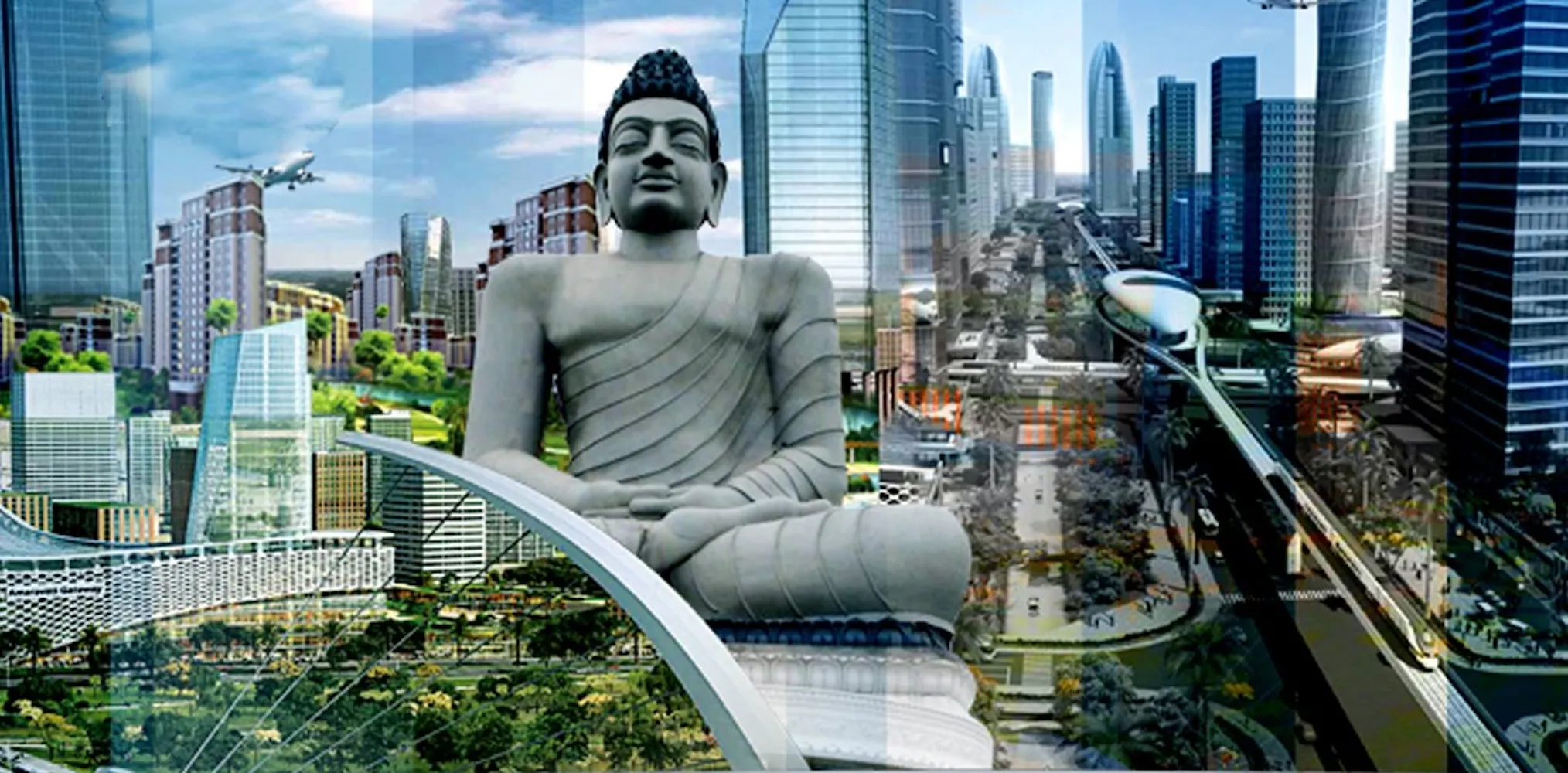
The above hard-hitting statement envisages that Andhra Pradesh’s capital project is “ Where the Master Plan is a movie script, and the budget is just a CGI glitch”.
History is full of grand capital cities and "megaprojects" that were sold as symbols of national pride but often ended up as fiscal cautionary tales. While some eventually find their footing, many trigger severe economic instability, debt traps, or become "ghost cities."
Recall how Egypt’s New Administrative Capital, a $58 billion project, has struggled with funding as the country faced an economic crisis. Critics argued the government attempted a development program greater than its ability to pay, leading to massive debt and affordability problems for citizens.
It’s a perfect example of spectacle outpacing actual demand and of projects that can push a state's finances to the breaking point, especially when they exceed the government's ability to pay.
Such a focus on new, flashy projects often comes at the expense of existing urban centres and social services. Critics warn that the Amaravati Capital Project, Chandrababu Naidu’s ambitious spectacle, has the potential to turn into one such “Vanity Project.”
They argue it is a classic example of "spectacle over governance," where the state’s massive debt, estimated at approximately ₹4.28 lakh crore as of December 2023, is overshadowed by high-end graphics and grand announcements.
Well, its proponents may argue comparing Amaravati to a fiscal crisis like Egypt is an insult to the vision that it isn't "chasing a spectacle", it’s building a "world-class, happiest city" that rivals Hyderabad's stature and puts Andhra on the international map.
While proponents see a "sustainable, modern administrative hub," detractors highlight that much of this vision remains confined to photo-ops while essential infrastructure in other cities and critical welfare sectors like health and education face neglect.
It is, as some say, the world’s first virtual-reality capital, a city where "visionary governance" means trading your drainage repairs for a 3D-rendered skyline. It operates on the grandiose concept: “Why fix a pothole in Guntur when you can launch a 4K drone video of a futuristic assembly building?”
In this modern era of "Announcement-First" economics, ribbon-cutting has become the state’s primary aerobic exercise. The strategy is simple: if the project is too expensive to build, just make the posters more expensive. In this ecosystem, the "Return on Investment" is currently being measured in retweets rather than revenue, and "engagement" is prioritized over actual employment.
While the State's debt climbs toward the heavens, the capital remains a "land pooling" masterpiece where the only thing flowing faster than the Krishna River is taxpayer money into "consultancy fees" and funding for counter-propaganda against critics.
The politics have shifted from the "necessary" to the "legendary." Repairs are boring; they don't look good on Instagram. But a “grand vision”? That’s the stuff of propaganda dreams.
It doesn't matter if the price of construction in Amaravati is reportedly over ₹14,000 per square foot—compared to ₹4,000 elsewhere—because you can’t put a price on a good rendering.
The alternative proposal, often referred to as MAVIGUN, is dismissed as a "fool's idea" in the current narrative. Proponents of the Amaravati "Mega-City" argue that anything less than a "greenfield" marvel lacks the "global branding" needed for investment.
To them, a functional, cost-effective capital is simply a lack of ambition. The issue has devolved into a binary narrative: if you question the feasibility of Amaravati, you are labelled "anti-development."
The 2026 Amendment Bill is now being framed by the ruling government as a final "victory" for the people, effectively silencing the debate over whether the state can actually afford its own spectacle.
In the end, Andhra Pradesh may find itself as the only state in the world where the citizens have a world-class capital to look at on their screens, but no money left in their pockets to actually move there.