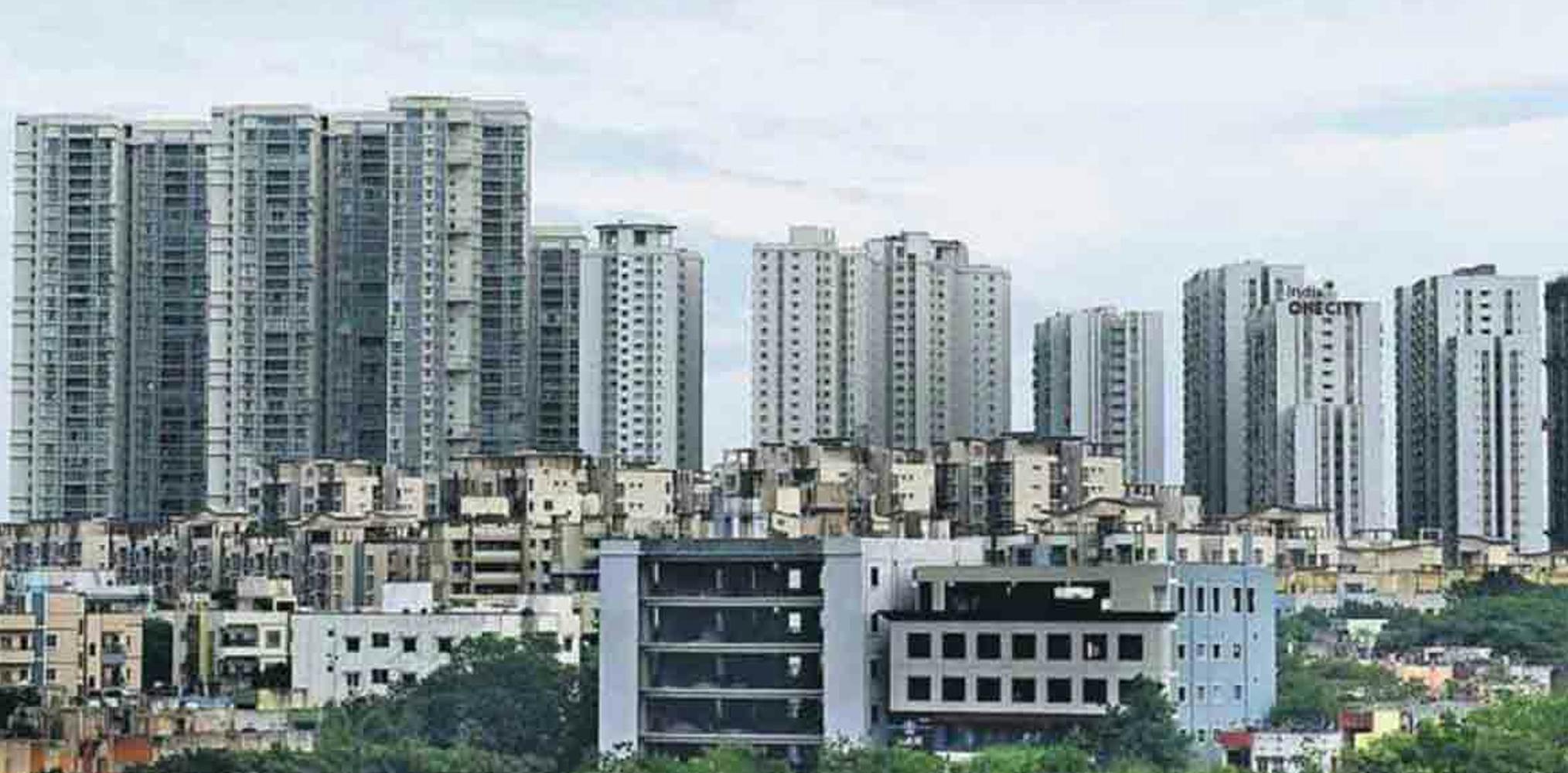
Hyderabad is undergoing a remarkable transformation as its skyline ascends to new heights, with a proliferation of skyscrapers reshaping the urban landscape. Despite a sluggish national real estate market, the city is witnessing an unprecedented surge in high-rise developments, particularly along the bustling IT corridor. Projections indicate that by the end of the current decade, dozens of buildings will soar to 60 floors and beyond, signaling a shift in architectural ambitions that aligns with global trends in urban living.
In 2024 alone, the Greater Hyderabad Municipal Corporation (GHMC) greenlit approximately 102 high-rise projects, a number that nearly doubled to 200 by 2025. This dramatic increase highlights a growing appetite for vertical living, with the Hyderabad Metropolitan Development Authority (HMDA) approving 90 additional towers. Areas such as Osman Nagar and Kokapet are emerging as frontrunners in this high-rise race, boasting buildings that rival iconic skyscrapers in cities like New York. Notably, projects are seeking approvals for up to 70 floors, reflecting a bold reimagining of the city’s skyline.
Realtors attribute this vertical boom to favorable Floor Space Index (FSI) regulations and soaring land prices, which encourage developers to maximize height in a competitive market. With a lack of caps on the FSI in western Hyderabad, developers are racing to construct taller structures, transforming neighborhoods into clusters of high-rises. N Praveen, president of the Telangana State Realtors Association, emphasizes that developers are luring buyers with a suite of amenities—ranging from luxurious clubhouses to co-working spaces—aimed at justifying the increasing costs associated with these upscale units.
However, the trend toward high-rise living is not without its challenges. Developers acknowledge that the costs associated with maintaining these towering structures often lead to higher prices for residents, with apartment rates starting at Rs 10,000 per square foot. Maintenance charges for these buildings can also be significantly higher, driven by the need for robust security, fire safety measures, and additional facilities, as highlighted by N Jaideep Reddy, president of CREDAI Hyderabad. As Hyderabad continues to evolve into a vertical city, the implications for urban planning, community dynamics, and housing affordability will be critical considerations for residents and policymakers alike.